03
INTRO
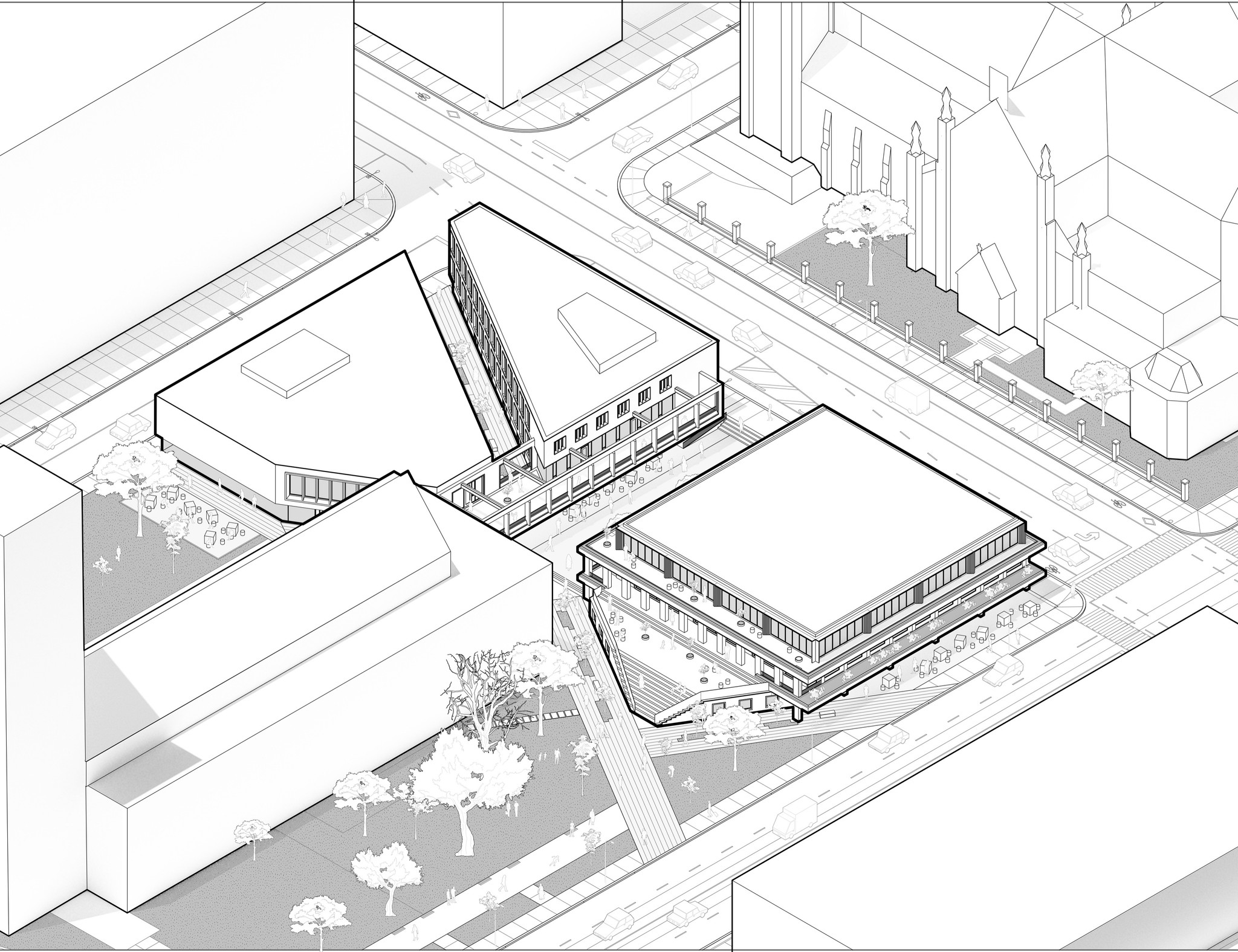
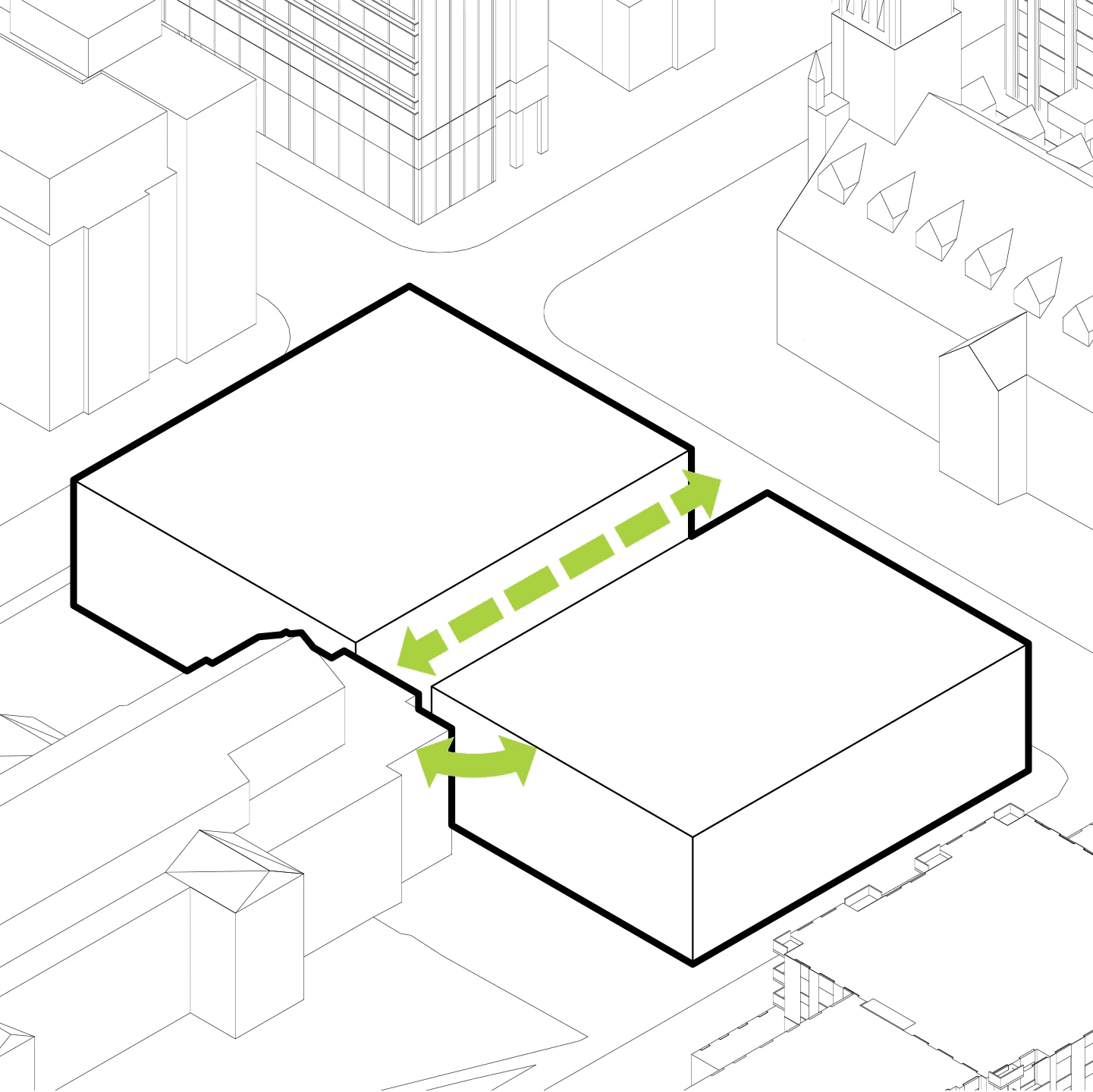
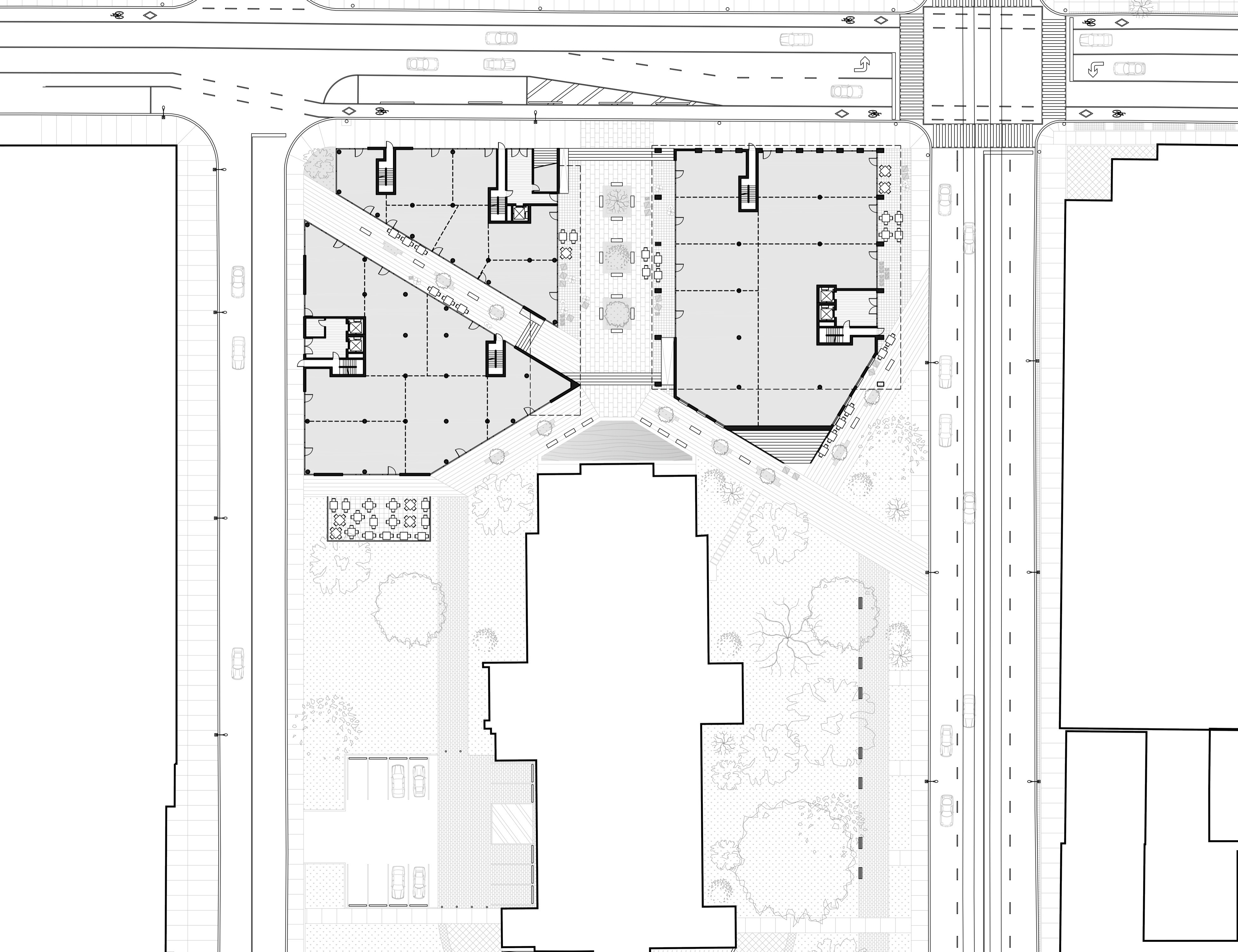
The parking lot at the south-west corner of Church and Shuter Streets in Toronto is owned by the United Metropolitan Church, which is also situated on the site. The lot was formerly home to the church's office and rectory space which was mostly demolished in 2008, with a small portion remaining standing but abandoned. The northern edge of the site neighbours St. Michaels Cathedral, another historically relevant building. The parking lot disrupts the pathways and landscaped space that exist on the southern portion of the site, but are forced to abruptly end to accommodate cars. The site poses a unique opportunity as it is part of an entire block of space under a single owner, allowing for a more large-scale, coordinated urban intervention.
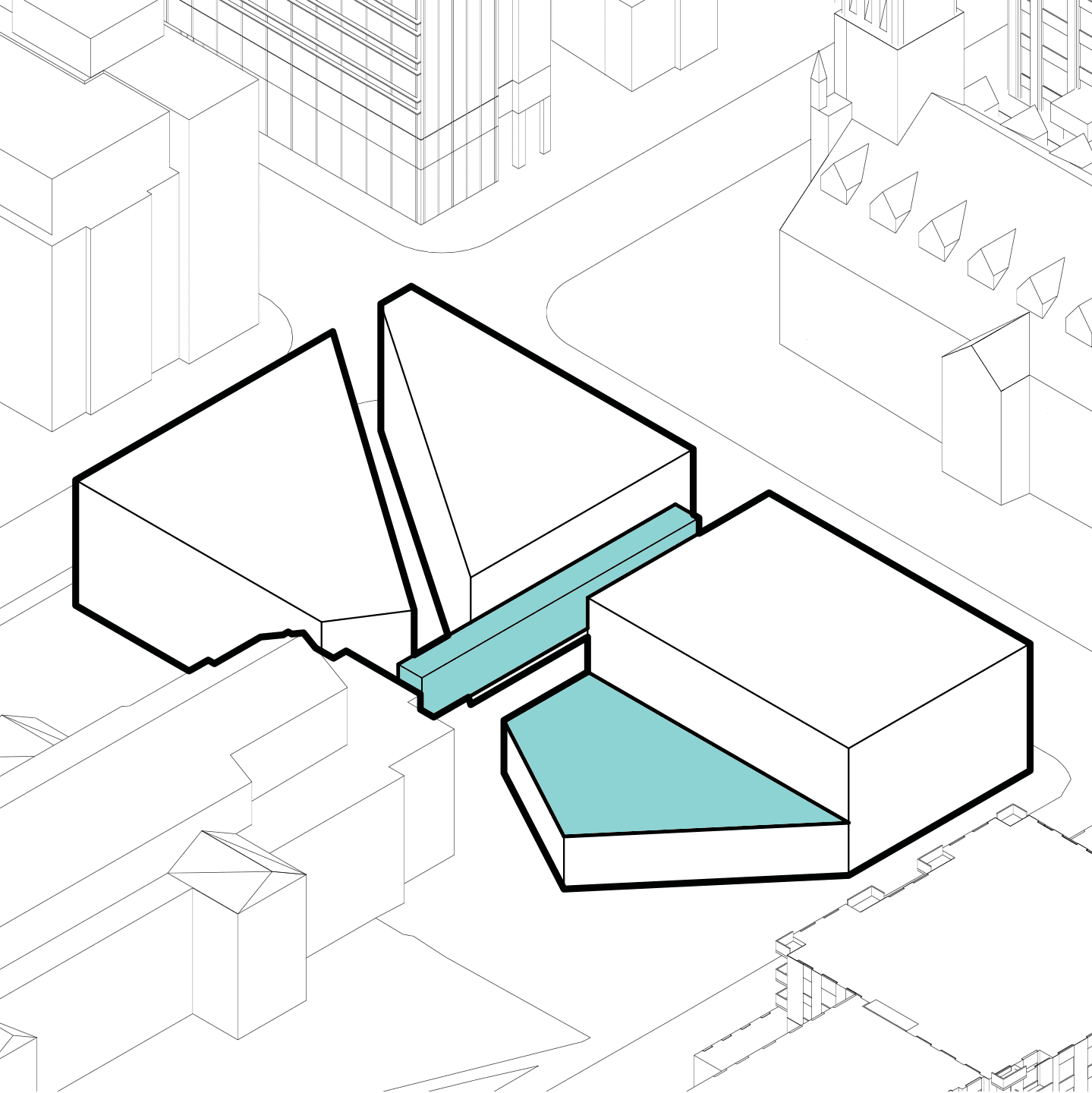

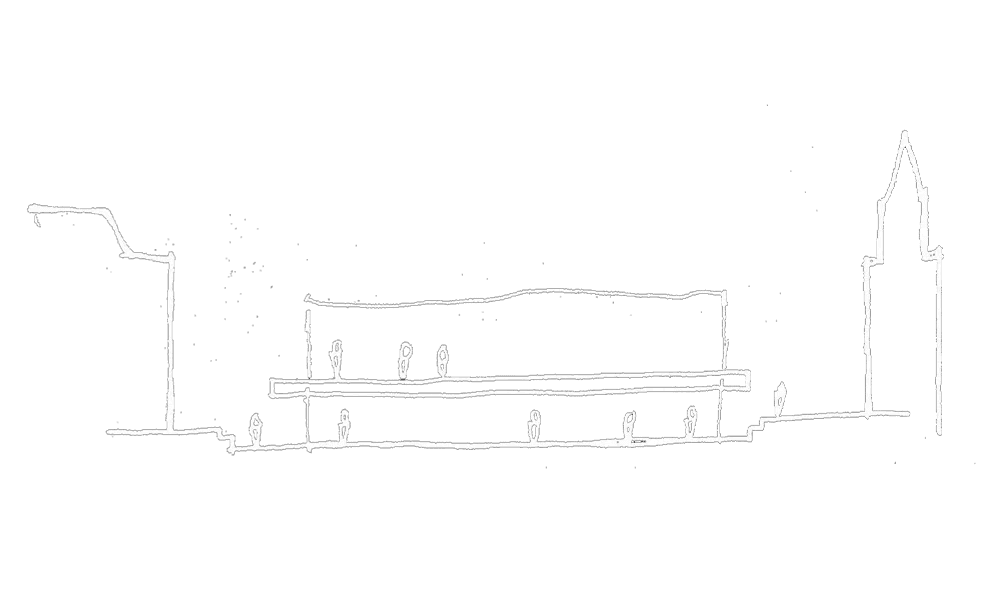
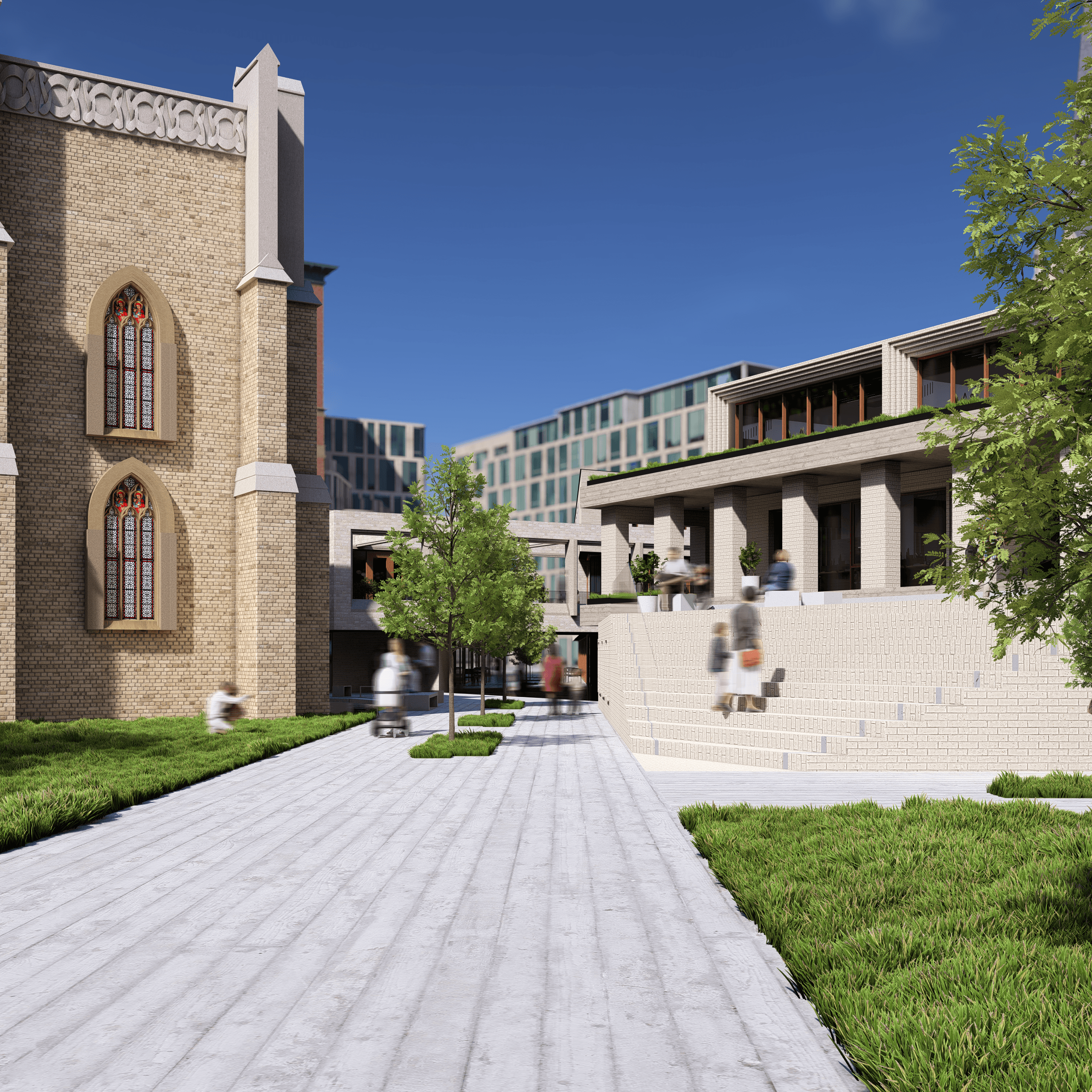
The central pedestrian space is lowered to assert the importance of the church, in a dynamic which mirrors the stairs of the altar which lies beyond the rear wall. A raised pedestrian space creates a unique perspective of the church, framing views of its rear facade and tower beyond.
DESIGN OBJECTIVES
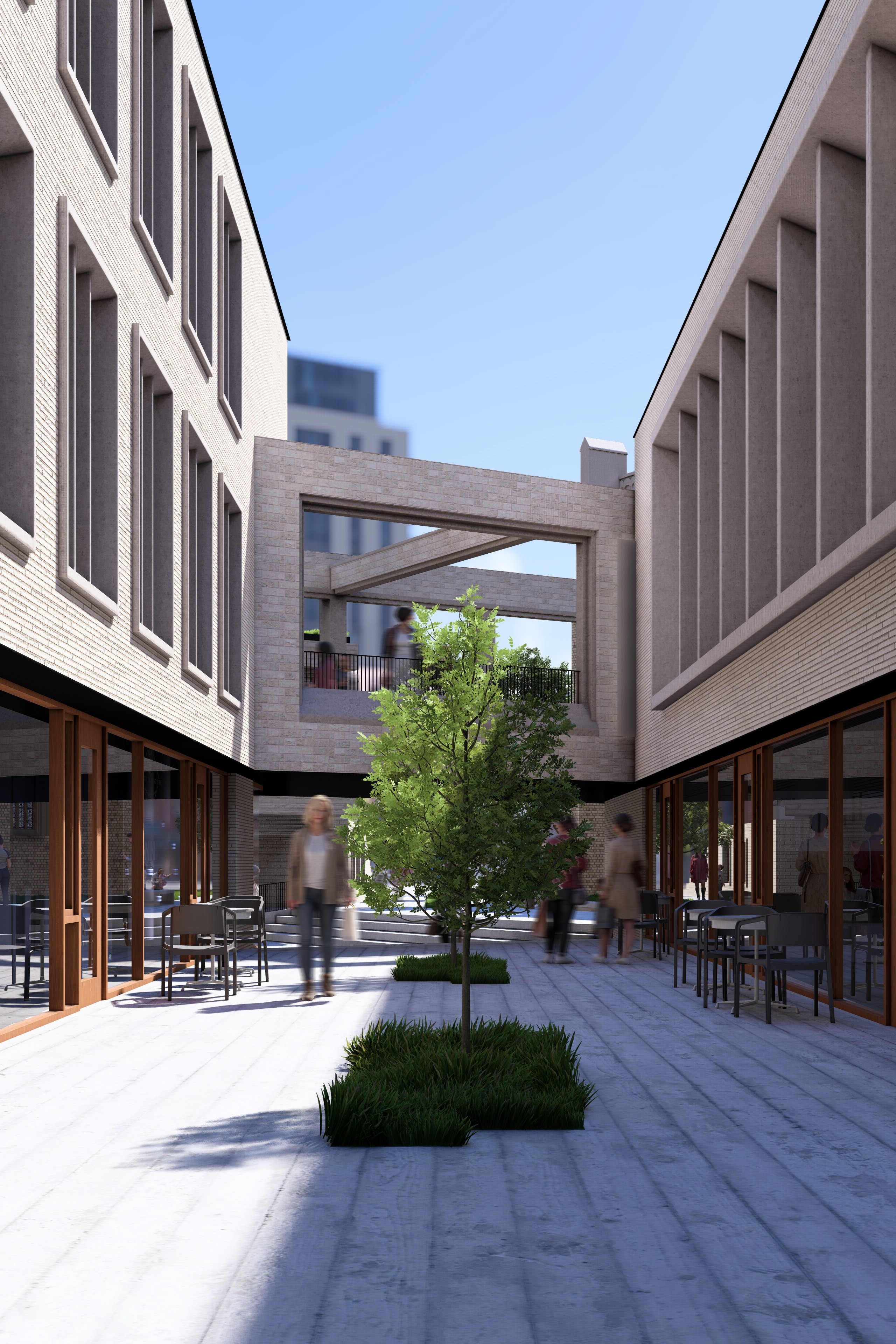
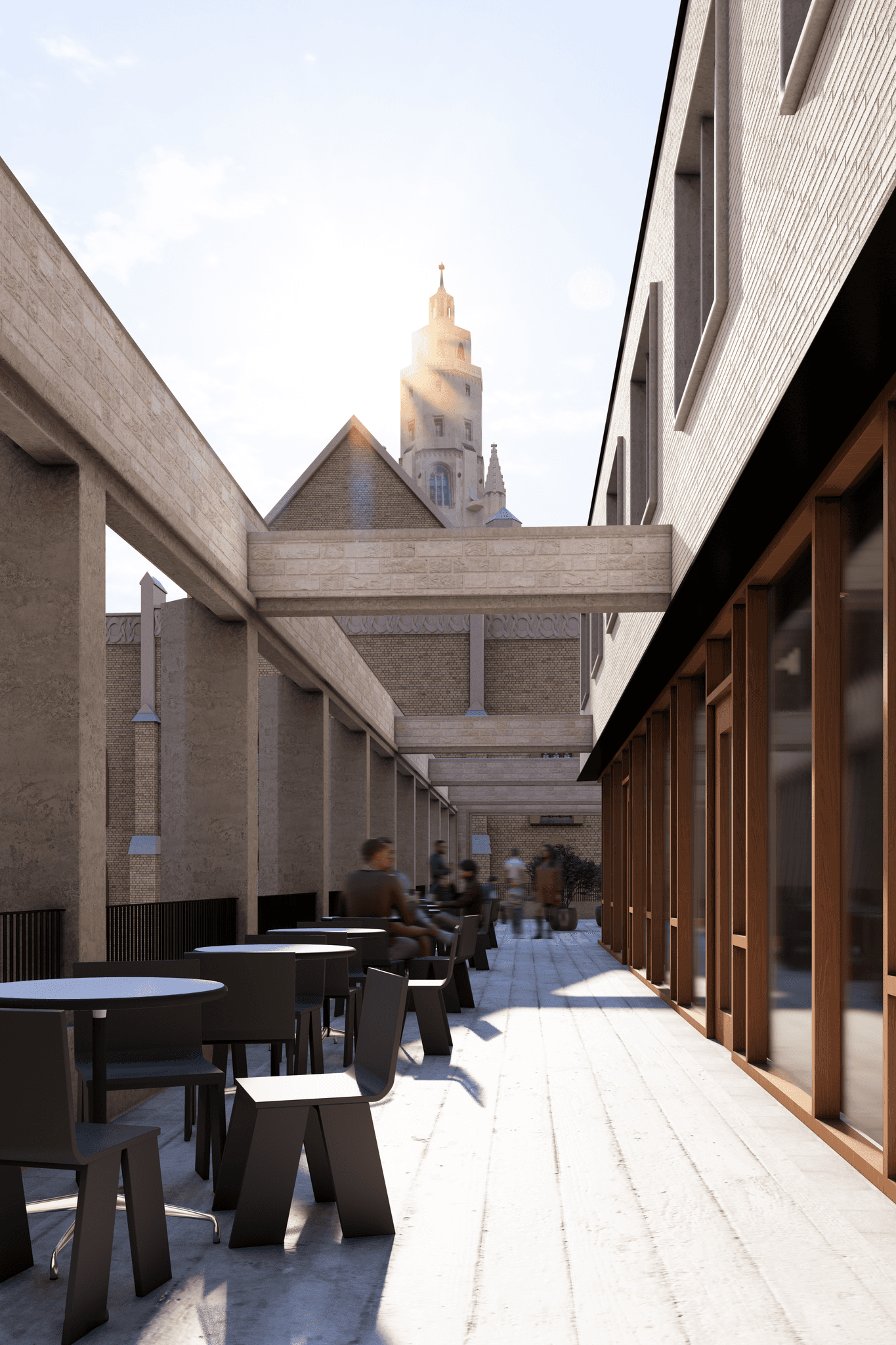
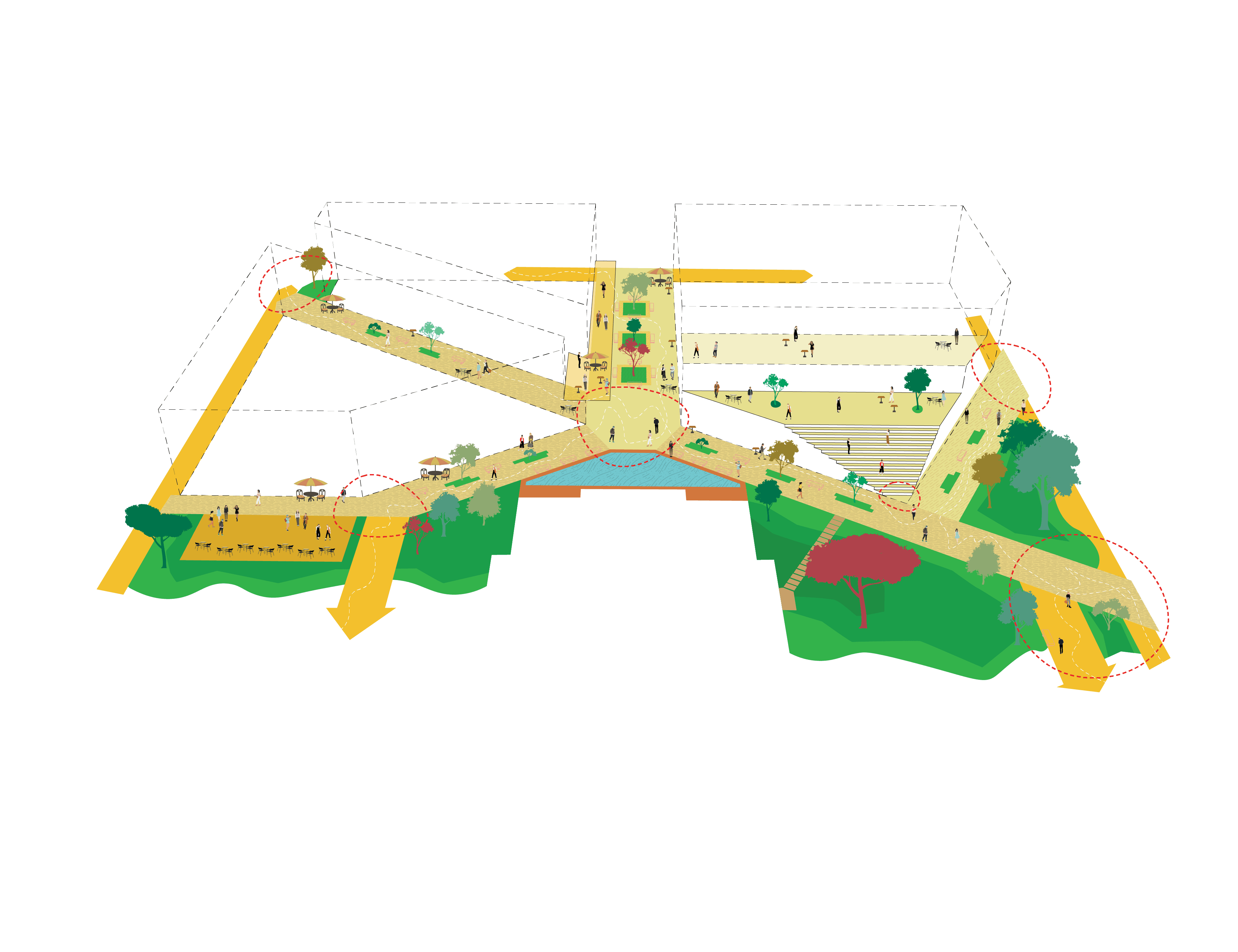
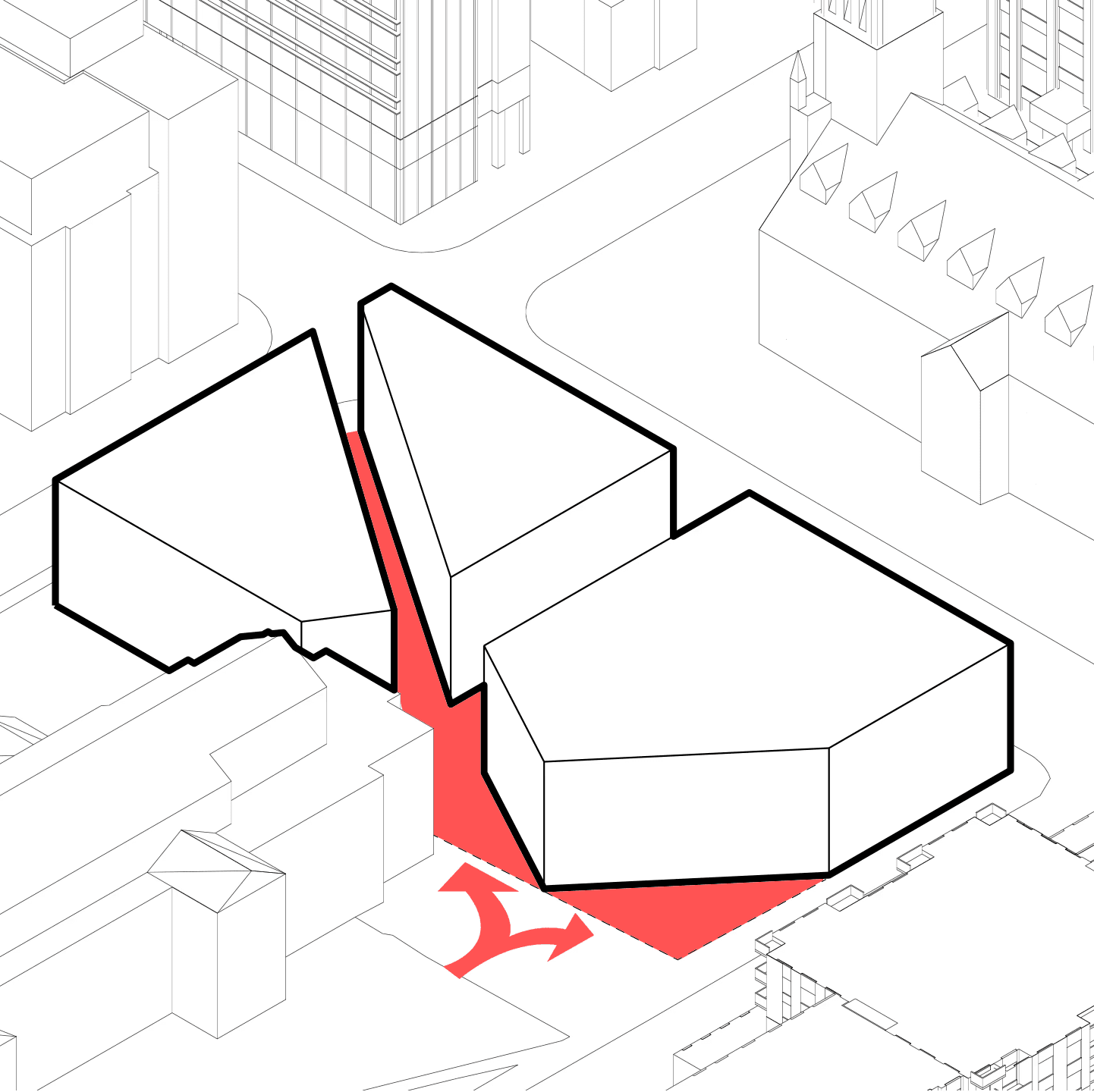
The central pedestrian space establishes a physical and visual connection between United Church, and St. Michaels Cathedral located across the street. The immersive atmosphere between these two significant buildings creates an engaging space for serendipitous activity to occur by leveraging the latent historical narratives of old Toronto and Church Street.
PEDESTRIAN EXPERIENCE
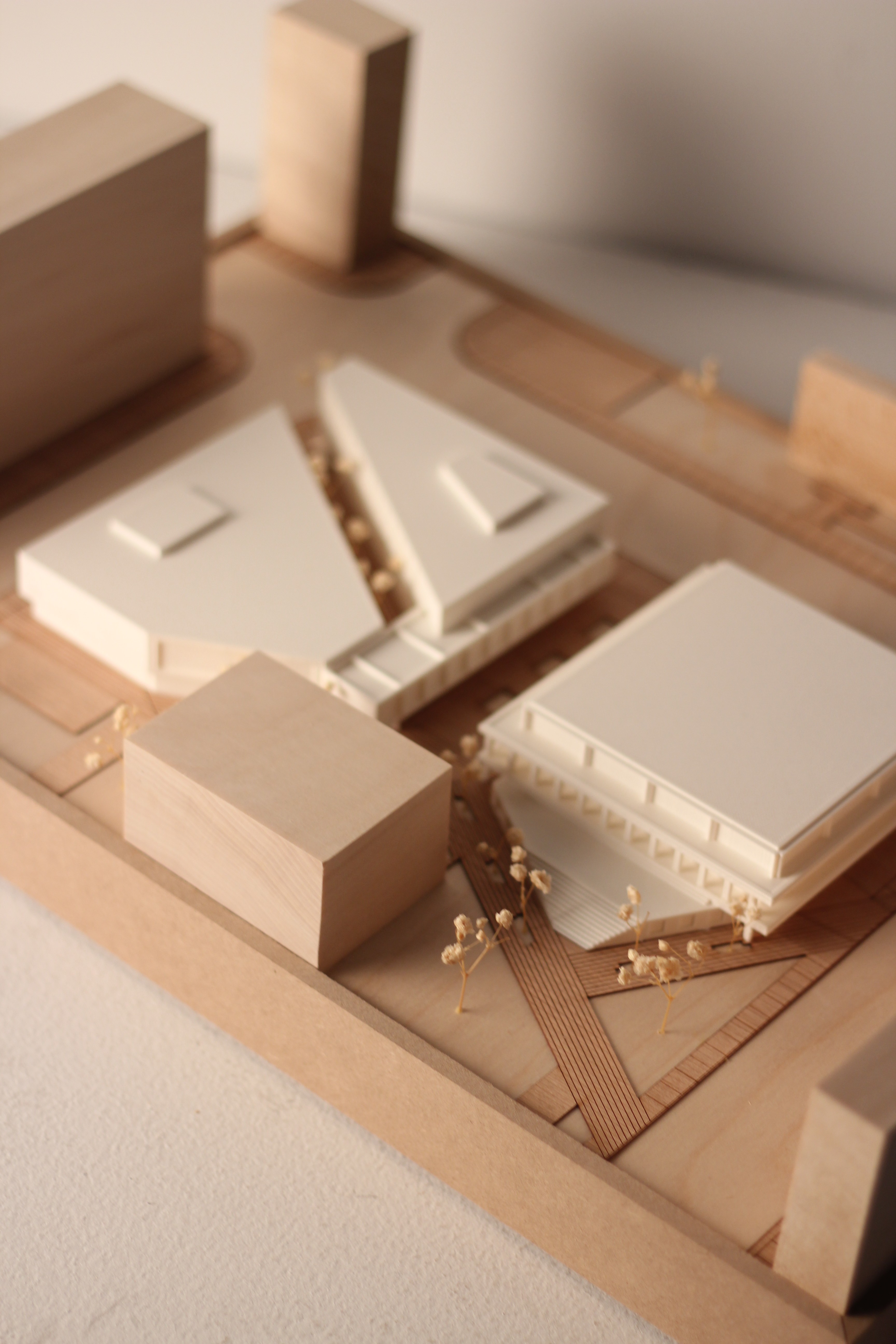
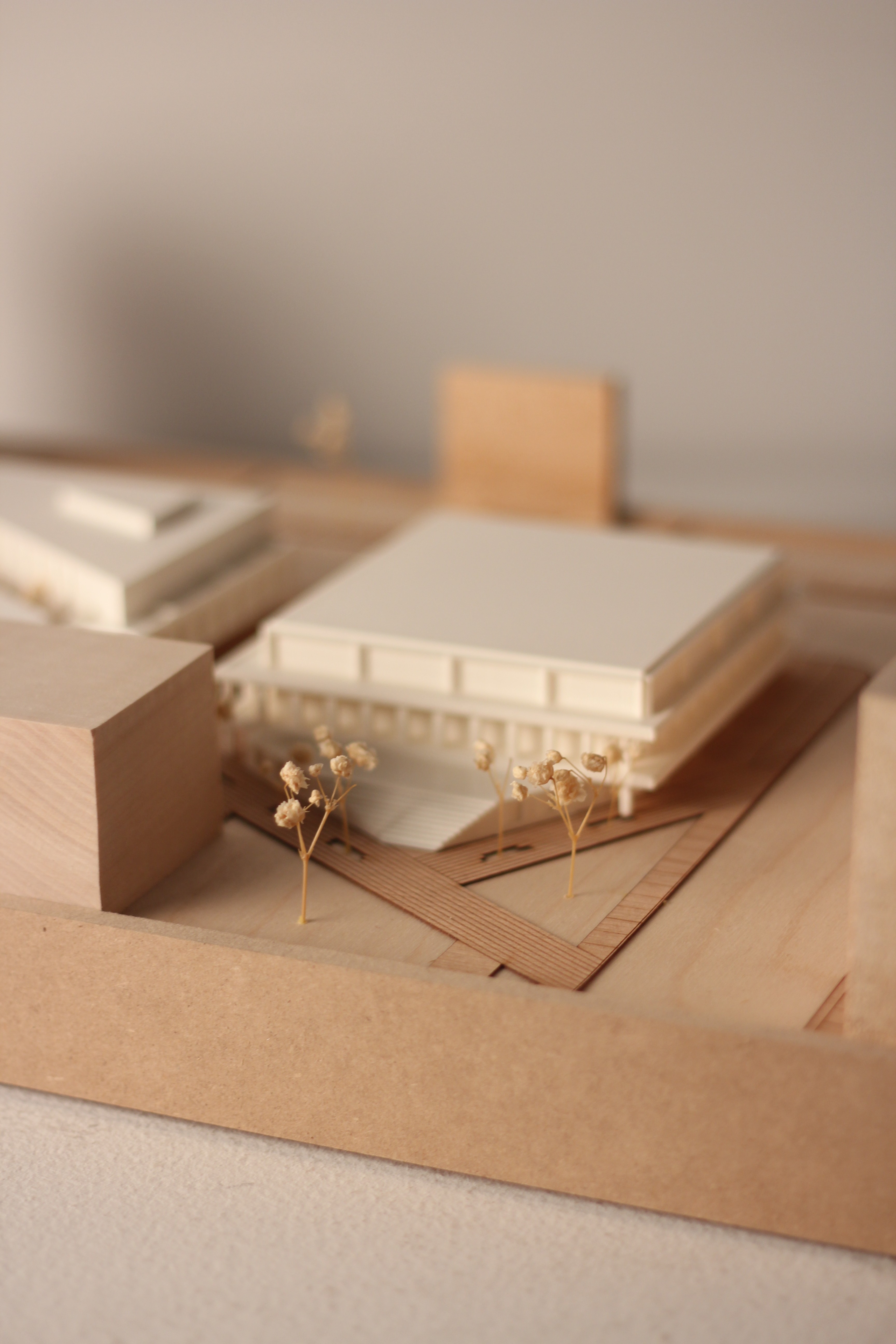
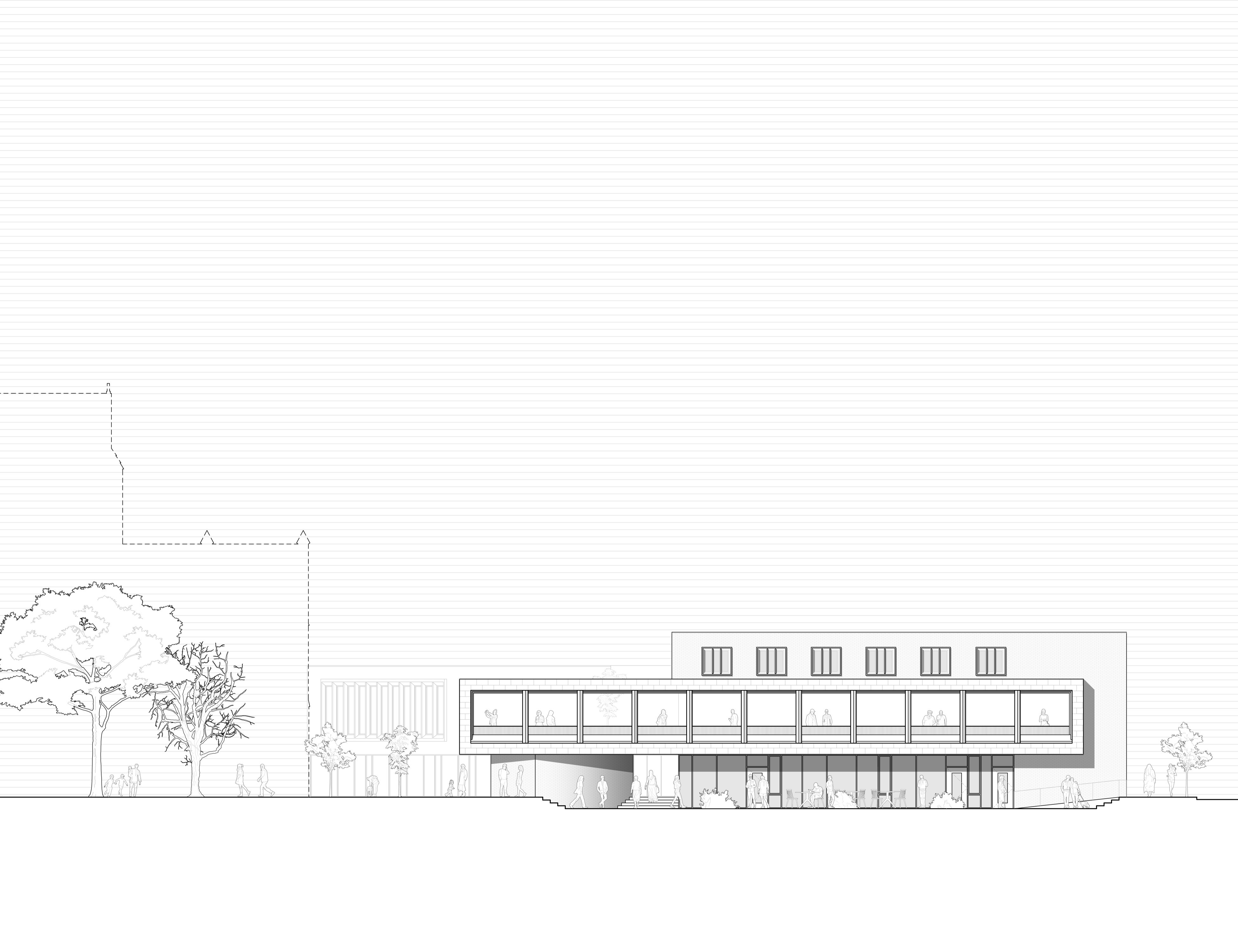
By ensuring that the two churches remain the central focus, the new buildings can honor the scale and materiality of the existing buildings, maintaining a prominent dialogue between St. Michael's Cathedral and the United Church. This interaction of spaces creates one of the most unique architectural atmospheres in Toronto where pedestrians can experience both of these impressive historical buildings in a space that compliments their rich qualities.
OUTCOMES
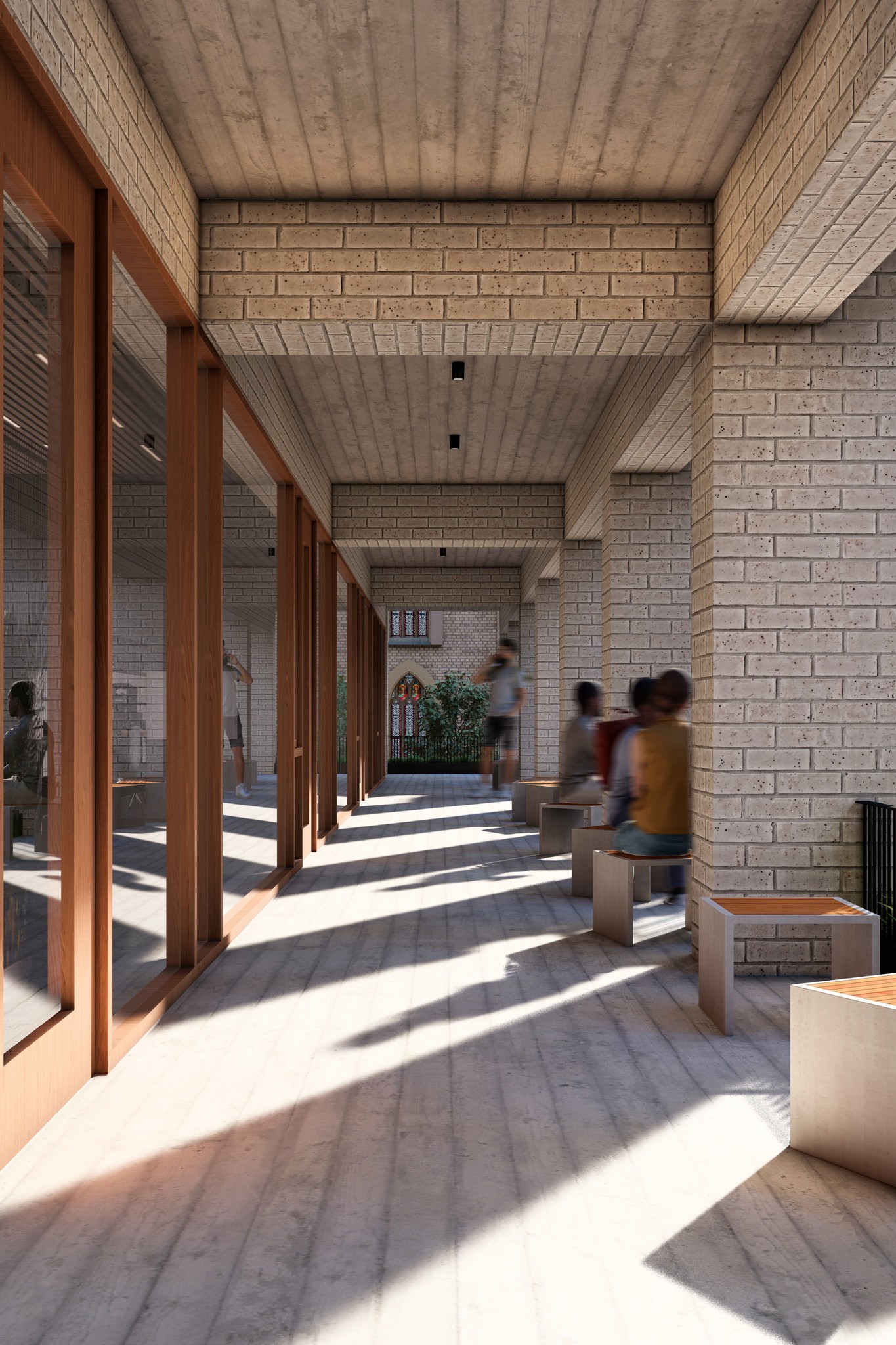
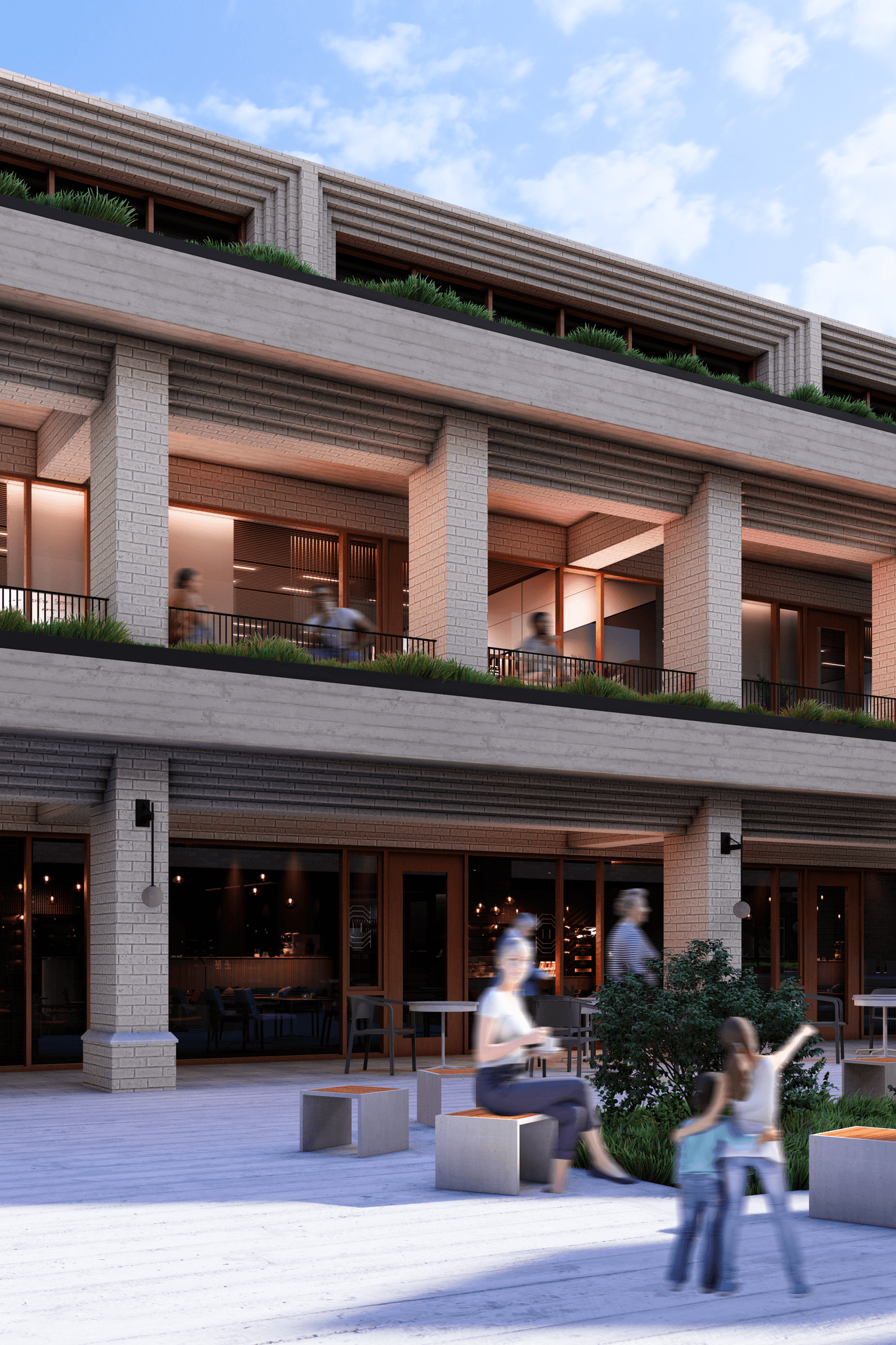
The site becomes a catalyst for serendipitous moments, drawing people into the site to explore the views, scale, and history of the site. Circulatory routes throughout the site encourage people to explore the site more freely, activating the space in ways that spark spontaneous interactions. This experience of discovery and hyper-accessibility transforms the site into a dynamic urban environment where serendipitous encounters and neighborhood engagement are naturally woven into everyday life.